E-commerce Innovates: AI-Driven Visuals, Global Payments, Recommerce, and Enhanced Merchant Operations Mark a Week of Significant Advancements


This week has seen a flurry of transformative updates for merchants across the e-commerce landscape, with innovations spanning product video creation, cross-border shipping, the burgeoning recommerce sector, sophisticated social marketing tools, localized commerce solutions, critical tax compliance mechanisms, advanced fulfillment strategies, inventory recovery services, and intelligent product data management. These developments collectively underscore a pivotal moment in digital commerce, where efficiency, global reach, and data-driven insights are becoming non-negotiable for competitive advantage. The focus remains on empowering businesses, from burgeoning startups to established enterprises, with the tools necessary to navigate an increasingly complex and dynamic marketplace.
Revolutionizing Product Visuals and Marketing with Artificial Intelligence
The visual presentation of products is paramount in e-commerce, directly impacting conversion rates and customer engagement. This week brought significant advancements in this area, leveraging artificial intelligence to democratize high-quality video production and innovative social media content.
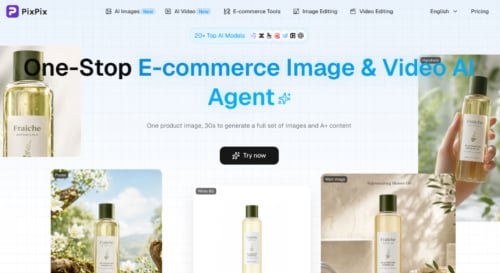
PixPix Launches AI Video Editing for Cost-Effective Production: PixPix, an AI-powered platform tailored for e-commerce and content marketing, unveiled a groundbreaking feature designed to drastically reduce the cost and time associated with creating professional product videos. This new capability allows teams to replicate the aesthetic and pacing of an existing video, including camera style, visual atmosphere, and composition, while seamlessly substituting the original product with their own. This innovation directly addresses a critical pain point for many merchants: the high expense and logistical challenges of producing diverse video content for various platforms.
The demand for video content has exploded, with short-form videos now dominating social media feeds and increasingly influencing purchasing decisions on product pages. Statistically, consumers are significantly more likely to purchase a product after watching a video about it, and businesses using video marketing typically see higher engagement rates. By enabling rapid creation of tailored content, PixPix empowers businesses to generate engaging short-form product videos for advertising campaigns, social media channels like TikTok and Instagram Reels, dynamic product pages, and A/B testing variations. A spokesperson for PixPix highlighted that the feature aims to "level the playing field for small and medium-sized businesses, allowing them to produce studio-quality content without the prohibitive costs, fostering greater creativity and market reach." This move is particularly timely as e-commerce platforms increasingly prioritize rich media for product listings.
Vmake Labs Introduces "Brainrot Marketing" for Viral Social Content: In a bold move to tap into contemporary internet culture, Vmake Labs, a social video studio, launched "Brainrot Marketing" video styles. This feature is designed to transform ordinary product photos into short, highly engaging, and often surreal social videos optimized for virality. Characterized by their loud, chaotic, and unconventional aesthetics, "Brainrot-style" videos aim to capture fleeting attention spans in crowded digital spaces.
The concept behind Brainrot Marketing acknowledges the evolving nature of online content consumption, where authenticity and disruptive creativity often outperform polished, traditional advertisements. Users can simply upload a product image, select a Brainrot-inspired style, and generate a ready-to-post marketing video in seconds. This democratizes access to a niche but effective form of social media marketing, particularly beneficial for small businesses looking to make a distinctive mark without extensive video editing skills. The implication for merchants is the ability to experiment with unconventional marketing strategies, potentially reaching younger, digitally native audiences through content that resonates with current meme culture and viral trends. Industry analysts suggest that such tools represent a shift towards more dynamic, context-aware content creation, moving beyond static images to immersive, attention-grabbing experiences.

Streamlining Global Commerce and Payment Gateways
The complexities of international trade and the demand for seamless payment experiences continue to drive innovation in the fintech and commerce technology sectors. This week saw crucial developments aimed at simplifying cross-border transactions, enhancing local payment options, and unifying commerce solutions.
Shift4 Launches "One" Cross-Border POS Payment Platform: Shift4, a prominent provider of payment processing and commerce technology, introduced Shift4 One, an all-in-one point-of-sale (POS) platform. This innovative handheld device integrates payments, dynamic currency conversion (DCC), and tax-free shopping into a single, streamlined solution. The tax-free shopping component is powered by Global Blue, a leader in tax refund services, which was recently acquired by Shift4, signifying a strategic move to offer comprehensive solutions for international travelers and merchants.
Initially launched in key European markets including the U.K., Ireland, Spain, and Germany, Shift4 One has ambitious expansion plans, targeting 15 countries across Europe by the end of the year. This platform directly addresses the challenges faced by merchants catering to international customers, such as managing multiple payment systems, navigating currency fluctuations, and processing tax refunds efficiently. The ability to offer tax-free shopping directly at the point of sale can significantly enhance the shopping experience for tourists, potentially boosting sales for participating retailers. The integration of DCC further benefits customers by allowing them to pay in their home currency, providing transparency and eliminating post-purchase conversion surprises. This strategic launch positions Shift4 to capture a larger share of the lucrative international tourism and cross-border retail market, which continues to recover and grow post-pandemic.
Payfuture Integrates with Shopify to Expand Local Payment Options in India: London-based fintech company Payfuture announced its integration with Shopify, a leading global e-commerce platform, to provide merchants with enhanced access to India-based payment methods. This integration is particularly significant given India’s rapidly expanding digital economy and unique payment landscape. Merchants using Shopify can now offer popular local payment options such as Unified Payments Interface (UPI) and NetBanking, which are widely adopted and preferred by Indian consumers.
India’s e-commerce market is projected to grow substantially, driven by increasing internet penetration and smartphone adoption. UPI, in particular, has revolutionized digital payments in India, becoming a dominant method for both online and offline transactions due to its instant, interoperable, and mobile-first nature. For international merchants looking to penetrate the Indian market, offering local payment methods is not just a convenience but a necessity for building trust and reducing cart abandonment. Payfuture’s integration with Shopify aligns with its broader strategy to facilitate local payment connectivity across various e-commerce platforms, enabling merchants worldwide to tap into diverse consumer bases by supporting their preferred transaction methods. This move underscores the importance of localized payment strategies in global e-commerce expansion.
Wix and Elavon Partner for Unified Commerce Solutions for Small Businesses: A strategic partnership between Wix, a leading website development and e-commerce platform, and Elavon, a global payment processing company and subsidiary of U.S. Bank, was announced this week. This collaboration aims to provide comprehensive, unified commerce solutions specifically designed for small businesses to start, grow, and scale their operations.
The partnership will combine Elavon’s robust payment processing tools with Wix’s extensive commerce offerings, creating an integrated ecosystem. This integration promises to streamline various business functions, including online and in-person sales, booking management, inventory tracking, and real-time analytics. For small businesses, managing disparate systems for different aspects of their operations can be a significant challenge, leading to inefficiencies and lost opportunities. The unified commerce approach allows merchants to have a holistic view of their business, ensuring consistent customer experiences across all touchpoints and simplifying back-end management. This collaboration reflects a broader industry trend towards providing all-in-one solutions that simplify digital transformation for small and medium-sized enterprises (SMEs), allowing them to compete more effectively in an increasingly digital-first economy.
The Growing Momentum of Recommerce and Sustainable Practices
The recommerce sector, focusing on the resale of pre-owned goods, continues its rapid ascent, driven by consumer demand for sustainability and value. Investment in this space reflects its growing importance within the broader retail ecosystem.
Fleek Secures $25 Million to Infuse AI into Secondhand Fashion: Fleek, a London-based company operating in the secondhand fashion marketplace, successfully raised $25 million in its latest funding round. The investment was led by Burda Principal Investments, an entity known for backing recommerce giants like Vinted, alongside participation from eBay, FJ Labs, and H14. This significant capital injection highlights investor confidence in the recommerce market’s continued growth and Fleek’s innovative approach.
Fleek’s platform distinguishes itself through its AI-powered capabilities, notably "Sort," a custom model trained on millions of transactions from its extensive marketplace. This AI is designed to enhance efficiency and user experience, likely by optimizing product categorization, pricing, and matching buyers with sellers. The global secondhand apparel market is projected to reach substantial figures in the coming years, driven by increasing environmental consciousness among consumers, a desire for unique items, and economic considerations. Fleek’s focus on integrating advanced AI into its operations positions it to scale efficiently, improve market liquidity, and offer a more personalized and streamlined experience for both sellers and buyers of pre-owned fashion. The involvement of eBay, a pioneer in online resale, further validates Fleek’s model and the strategic importance of AI in this evolving sector.
Optimizing Operations, Compliance, and Data Management
Beyond customer-facing innovations, behind-the-scenes operational efficiency, regulatory compliance, and robust data management are crucial for sustainable e-commerce growth. This week’s announcements featured tools designed to address these critical areas.
Klaviyo Integrates Social Marketing into its CRM Platform: Klaviyo, a leading platform for email, SMS, and customer relationship management (CRM), introduced a new feature to integrate social media engagement directly into its omnichannel marketing strategies. This development is a significant step towards breaking down data silos that often exist between social media activities and broader marketing efforts.
According to Klaviyo, this new capability empowers merchants to convert social media followers into valuable subscribers by leveraging social auto-replies to collect consent for email, text, and WhatsApp communications, along with crucial first-party data. Furthermore, it allows businesses to capture social interactions, content preferences, and engagement signals, enabling the creation of more targeted and relevant audience segments for future campaigns. In an era where personalized marketing is paramount and privacy regulations are tightening, the ability to consolidate customer data from various touchpoints, including social media, provides a comprehensive view of the customer journey. This integration helps businesses build stronger, more personalized relationships with their audience, ultimately driving higher engagement and conversion rates by tailoring communications based on observed social behavior and expressed interests.
MyCommunityToday Launches "Deal Chief" AI Sales Agent for Local Businesses: MyCommunityToday, a marketplace and platform connecting neighborhood businesses with local consumers, unveiled "Deal Chief," an AI-powered sales agent. This innovative tool is designed to generate leads and promote deals specifically for local businesses, addressing the unique challenges they face in digital marketing.

MyCommunityToday operates by providing local businesses with an online presence to showcase their products, services, deals, and coupons within their community. Deal Chief complements this by automating aspects of the sales process, potentially identifying prospective customers and proactively promoting relevant offers. For local businesses, often constrained by limited marketing budgets and expertise, an AI-driven sales agent can be a game-changer. It offers a scalable way to increase visibility, attract new customers, and drive sales without requiring extensive manual effort. This initiative underscores the growing role of AI in empowering smaller enterprises, bridging the gap between traditional local commerce and the capabilities of digital-first platforms.
Kintsugi Integrates with Shopline for Enhanced Sales Tax Compliance: Shopline, a global commerce platform, announced a native integration with Kintsugi, a platform specializing in automating sales tax, value-added tax (VAT), and goods and services tax (GST). This partnership aims to simplify the often-complex world of tax compliance for merchants operating across various jurisdictions.
Navigating sales tax regulations is a significant challenge for e-commerce businesses, particularly as they expand internationally. Different countries, states, and even local municipalities have varying tax rates and rules, requiring constant monitoring and accurate calculation. The integration with Kintsugi provides Shopline merchants with a comprehensive tax compliance workflow, encompassing accurate tax calculation at checkout, real-time nexus monitoring (identifying where a business has a tax obligation), support for country, state, and local registrations, and automated tax filing. This automation minimizes the risk of errors, reduces the administrative burden on merchants, and helps ensure adherence to evolving tax laws globally. Such integrations are vital for fostering international trade by making global expansion less daunting for businesses.
Akeneo Unveils "Agentic Ziggy" for Intelligent Product Data Management: Akeneo, a leading provider of product information management (PIM) solutions, introduced "Agentic Ziggy," a groundbreaking feature for its product data platform. This innovation allows users to deploy and manage AI agents that can enrich, govern, and orchestrate product data throughout its entire lifecycle.
Product data management is a cornerstone of effective e-commerce. High-quality, consistent, and comprehensive product information is essential for compelling product pages, accurate search results, and seamless customer experiences. "Agentic Ziggy" empowers product data teams to leverage AI for tasks such as data modeling, schema mapping, and automated data enrichment, transforming raw data into rich, compelling product narratives. The implications are significant: improved data accuracy, reduced manual effort, faster time-to-market for new products, and ultimately, a more consistent and engaging product experience for consumers across all channels. This move by Akeneo signifies the next evolution of PIM, moving from mere data storage to intelligent, AI-driven data optimization.
Advancements in Fulfillment, Inventory, and Business Resilience
Efficient fulfillment, smart inventory management, and robust recovery strategies are crucial for maintaining customer satisfaction and financial health in e-commerce. This week saw innovations in warehouse automation and liquidation solutions.
Robust AI and ShipLab Deploy Warehouse Robots for Enhanced Fulfillment: Robust AI, a provider of warehouse automation solutions, partnered with ShipLab, an e-commerce fulfillment and logistics firm based in San Diego, California, to deploy mobile robots at ShipLab’s Vista facility. This collaboration marks a significant step towards integrating advanced robotics into e-commerce fulfillment operations.

The initial phase of the deployment will automate tote transport between fulfillment and packing stations, a critical and often labor-intensive part of the warehouse workflow. The plan is to subsequently expand the robot fleet across the entire picking operation, further increasing efficiency and reducing reliance on manual labor. E-commerce fulfillment centers face immense pressure to process orders quickly and accurately, especially during peak seasons. The rising cost of labor and persistent labor shortages have made automation an increasingly attractive solution. Mobile robots can work autonomously alongside human employees, improving throughput, reducing errors, and allowing human workers to focus on more complex tasks. This partnership exemplifies the growing trend of small to medium-sized fulfillment centers adopting robotic solutions to scale operations and enhance competitiveness.
Eaton Hudson Launches E-Commerce Liquidation Platform: Eaton Hudson, a firm specializing in asset valuation, disposition, and capital advisory, announced the launch of its E-Commerce Liquidation Division. This new platform is designed to help online retailers and consumer brands maximize value from excess inventory, customer returns, warehouse assets, and distressed e-commerce merchandise.
The challenge of managing excess inventory and customer returns is a persistent and costly issue for e-commerce businesses. Returns, in particular, can be complex and expensive to process, often leading to significant losses if not managed effectively. Eaton Hudson’s new division offers a dedicated recovery platform, providing specialized services to convert these often-overlooked assets into capital. This expansion of recovery and advisory services comes at a time when supply chain disruptions, fluctuating consumer demand, and the high volume of online returns have made efficient inventory disposition more critical than ever. The platform offers a strategic avenue for businesses to mitigate losses, clear warehouse space, and recover value from goods that might otherwise be written off, contributing to a more circular and sustainable e-commerce economy.
Empowering Sellers Through Education
Knowledge and continuous learning are fundamental for success in the ever-evolving e-commerce landscape. Amazon’s latest initiative aims to democratize access to essential selling knowledge.
Amazon’s Seller University Now Accessible to All: Amazon announced a significant update to its Seller University, its free educational resource, making it available to everyone, regardless of whether they have an Amazon selling account. Previously, access was restricted to registered Amazon sellers, limiting its reach to those already committed to the platform.
This move democratizes access to a wealth of on-demand educational content covering a wide array of topics crucial for e-commerce success. The content caters to all experience levels, from beginners seeking to understand the basics of online selling to established sellers looking to optimize their operations. Modules include practical guidance on creating compelling listings, strategic pricing, efficient fulfillment processes, and effective advertising techniques. By opening up Seller University, Amazon is not only fostering a more educated seller base but also potentially attracting new entrepreneurs to its ecosystem by lowering the barrier to entry for learning about online selling. This initiative reflects a commitment to empowering a broader community of merchants, recognizing that a well-informed seller base ultimately contributes to a more vibrant and competitive marketplace.
Broader Implications and Future Outlook
The collective impact of this week’s e-commerce innovations points towards a future where technology, particularly artificial intelligence and advanced automation, plays an even more central role in every facet of online retail. Merchants are being equipped with tools that not only enhance efficiency and reduce costs but also enable deeper customer engagement, broader market reach, and greater operational resilience.

The emphasis on AI-driven content creation, unified commerce platforms, and intelligent data management highlights a move towards hyper-personalization and streamlined operations. Cross-border payment solutions and tax compliance automation signal a continued push towards a truly global marketplace, making international expansion more feasible for businesses of all sizes. Furthermore, the significant investment in recommerce and the development of liquidation platforms underscore a growing industry-wide focus on sustainability and efficient resource management, moving away from linear consumption models.
As e-commerce continues its rapid evolution, the ability of merchants to adopt and integrate these new technologies will be paramount to their success. The industry is witnessing a convergence of cutting-edge tech and practical business solutions, promising a more efficient, customer-centric, and globally interconnected future for online retail. The trend towards democratizing access to sophisticated tools, whether through AI-powered video editing or open educational resources, indicates a commitment to empowering a diverse ecosystem of merchants to thrive in the digital age.